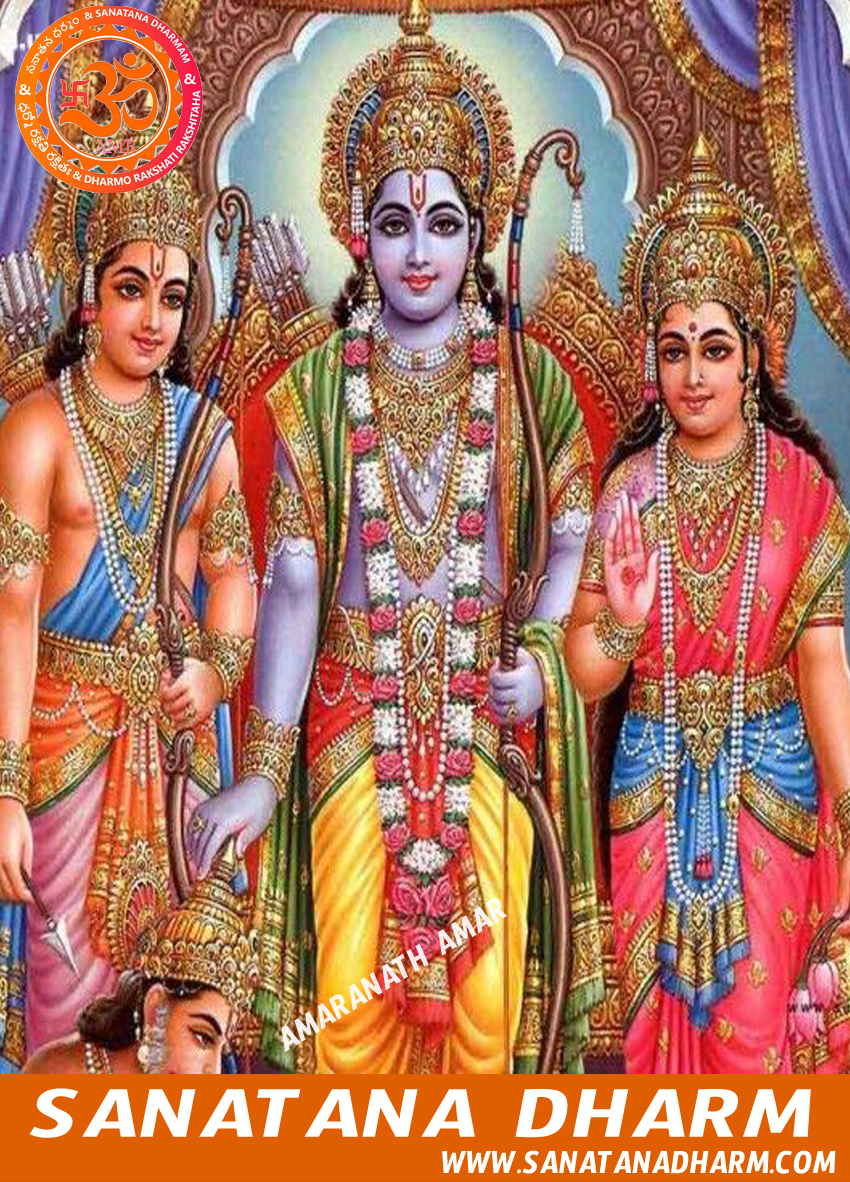
About the Ramayana :- The Ayodhya Kanda is the most emotionally powerful section of the Ramayana. As King Dasharatha prepares to crown Rama as heir, Queen Kaikeyi — influenced by her maid Manthara — invokes two ancient boons, demanding that Rama be exiled for 14 years and her own son Bharata be crowned instead. Rama accepts exile without a moment of hesitation, demonstrating perfect obedience and dharma. Sita and Lakshmana insist on accompanying him. The citizens of Ayodhya weep as the three depart for the forest. King Dasharatha dies of grief. When Bharata learns of these events, he rushes to the forest and begs Rama to return, but Rama refuses to break his father's word. Bharata takes Rama's sandals and places them on the throne, ruling as regent. This kanda teaches the supreme value of keeping one's word and the power of sacrifice.

Sanatana Dharm సనాతన ధర్మం  Sanatana Dharm సనాతన ధర్మం  Sanatana Dharm సనాతన ధర్మం
stroms English  Srimad Bhagavad Gita  Valmiki Ramayanam English

Valmiki Ramayanam - अयोध्याकाण्ड - Ayodhya Kanda


Ayodhya Kanda - Sarga 19 - 39v


Ayodhya Kanda – Sarga 19 · v1
तत् अप्रियम् अमित्रघ्नः वचनम् मरण उपमम् |
श्रुत्वा न विव्यथे रामः कैकेयीम् च इदम् अब्रवीत् || २-१९-१

Rama the annihilator of enemies heard those harsh and deadly words but was unruffled. He spoke these words to Kaikeyi.

वह अप्रिय और मित्र को मारने वाले वचन मृत्यु के समान थे। यह सुनकर राम विचलित नहीं हुए और कैकेयी से यह बोले।

Ayodhya Kanda – Sarga 19 · v2
एवम् अस्तु गमिष्यामि वनम् वस्तुम् अहम् तु अतः |
जटा चीर धरः राज्ञः प्रतिज्ञाम् अनुपालयन् || २-१९-२

"Let it be, as you said it. I shall fulfil the king's promise, go to the forest from here to reside there, wearing braided hair and covered with a hide."

ऐसा ही हो। मैं राजा की प्रतिज्ञा का पालन करते हुए, जटा और वल्कल धारण करके वन में निवास करने के लिए जा रहा हूँ।


Ayodhya Kanda – Sarga 19 · v3
इदम् तु ज्ञातुम् इच्चामि किम् अर्थम् माम् मही पतिः |
न अभिनन्दति दुर्धर्षो यथा पुरम् अरिम् दमः || २-१९-३

"But I want to know why the king, the inviolable and the subduer of enemies, is not greeting me today as before."

मैं यह जानना चाहता हूँ कि यह शक्तिशाली राजा मुझे क्यों नहीं स्वीकार करता, जैसे कि वह अपने शत्रु को वश में करने वाले योद्धा का स्वागत करता है।

Ayodhya Kanda – Sarga 19 · v4
मन्युर् न च त्वया कार्यो देवि ब्रूहि तव अग्रतः |
यास्यामि भव सुप्रीता वनम् चीर जटा धरः || २-१९-४

"Oh, queen! you need not be indignant. I am telling before you that I shall go to the forest, wearing rags and braided hair. Become delighted well."

हे देवी, तुम क्रोध मत करो, जो तुम कहोगी वही मैं करूँगा। मैं प्रसन्न होकर वन को जाऊँगा, जटा धारण करूँगा।

Ayodhya Kanda – Sarga 19 · v5
हितेन गुरुणा पित्रा क्ऱ्तज्ञेन न्ऱ्पेण च |
नियुज्यमानो विश्रब्धम् किम् न कुर्यात् अहम् प्रियम् || २-१९-५

"How can I not do faithfully an action dear to my father, as commanded by him as well-wisher, venerable man, as person with right conduct and as king."

हितैषी गुरु, पिता और कृतज्ञ राजा के द्वारा जब मुझे कोई कार्य सौंपा जाता है, तो मैं विश्वासपूर्वक क्या प्रिय कार्य नहीं करूँगा?

Ayodhya Kanda – Sarga 19 · v6
अलीकम् मानसम् तु एकम् ह्ऱ्दयम् दहति इव मे |
स्वयम् यन् न आह माम् राजा भरतस्य अभिषेचनम् || २-१९-६

"My heart is burning indeed with one sorrowful feeling that king himself has not informed me about Bharata's coronation."

यह श्लोक कहता है कि मेरे मन में एक झूठी चिंता है, जैसे कि मेरा हृदय जल रहा हो। मुझे यह दुख है कि राजा भरत के राज्याभिषेक के बारे में मुझे स्वयं क्यों नहीं बताया गया।

Ayodhya Kanda – Sarga 19 · v7
अहम् हि सीताम् राज्यम् च प्राणान् इष्टान् धनानि च |
ह्ऱ्ष्टः भ्रात्रे स्वयम् दद्याम् भरताय अप्रचोदितः || २-१९-७

"Without being asked, I myself would have gladly offered even Sita with kingdom, even my life, loved ones and wealth."

मैं प्रसन्नतापूर्वक सीता को, राज्य को, अपने प्राणों को और प्रिय धन को भी, भरत के लिए स्वयं ही, बिना किसी के कहे, दे देता।

Ayodhya Kanda – Sarga 19 · v8
किम् पुनर् मनुज इन्द्रेण स्वयम् पित्रा प्रचोदितः |
तव च प्रिय काम अर्थम् प्रतिज्ञाम् अनुपालयन् || २-१९-८

"Being directed by king, who is my father himself, how much more should I tell that I can give everything to Bharata, duly obeying father's promise to fulfil your beloved desire."

जब पिता स्वयं प्रेरित करें और प्रिय की इच्छा पूरी करने के लिए प्रतिज्ञा का पालन करना हो, तो मनुष्य इंद्र के समान क्या नहीं कर सकता।

Ayodhya Kanda – Sarga 19 · v9
तत् आश्वासय हि इमम् त्वम् किम् न्व् इदम् यन् मही पतिः |
वसुधा आसक्त नयनो मन्दम् अश्रूणि मुन्चति || २-१९-९

"That is why, you console him. Why indeed the king is thus slowly shedding tears, with eyes gazed upon the floor?"

वह राजा पृथ्वी को आसक्त नेत्रों से देखकर धीरे-धीरे आँसू क्यों नहीं बहा रहा है? उसे आश्वस्त करो।

Ayodhya Kanda – Sarga 19 · v10
गच्चन्तु च एव आनयितुम् दूताः शीघ्र जवैः हयैः |
भरतम् मातुल कुलात् अद्य एव न्ऱ्प शासनात् || २-१९-१०

"Let messengers go now itself on fleet horses to bring Bharata from maternal uncle's house as per orders of the king."

मामा के घर से भरत को आज ही राजा के आदेश से शीघ्र गति वाले घोड़ों पर बिठाकर ले आया जाए।

Ayodhya Kanda – Sarga 19 · v11
दण्डक अरण्यम् एषो अहम् इतः गच्चामि सत्वरः |
अविचार्य पितुर् वाक्यम् समावस्तुम् चतुर् दश || २-१९-११

"Immediately, I shall go to live in forest of Dandaka for fourteen years, without reflecting on whether my father's words are right or wrong."

यह मैं, दण्डक वन में, शीघ्रता से जा रहा हूँ। पिता की आज्ञा पर विचार किए बिना, चौदह वर्ष तक निवास करने के लिए।

Ayodhya Kanda – Sarga 19 · v12
सा ह्ऱ्ष्टा तस्य तत् वाक्यम् श्रुत्वा रामस्य कैकयी | प्रस्थानम् श्रद्दधाना हि त्वरयाम् आस राघवम् || २-१९-१२

Hearing Rama's words, Kaikeyi felt glad that he would certainly go and urged him to make haste at once.

कैकेयी राम के उस वाक्य को सुनकर प्रसन्न हुई और राम के वनगमन पर विश्वास करके उन्हें शीघ्रता से जाने के लिए कहा।

Ayodhya Kanda – Sarga 19 · v13
एवम् भवतु यास्यन्ति दूताः शीघ्र जवैः हयैः |
भरतम् मातुल कुलात् उपावर्तयितुम् नराः || २-१९-१३

"Let it be so. Messengers can go on horses having rapid speed, to bring back Bharata from his maternal uncle's house."

ऐसा ही हो, शीघ्र गति वाले घोड़ों पर सवार होकर दूत भरत को मामा के घर से वापस लाने के लिए जाएंगे।

Ayodhya Kanda – Sarga 19 · v14
तव तु अहम् क्षमम् मन्ये न उत्सुकस्य विलम्बनम् | राम तस्मात् इतः शीघ्रम् वनम् त्वम् गन्तुम् अर्हसि || २-१९-१४

"But I think it is not quite appropriate for you who are enthusiastic to go to forest, to delay further."

मैं तुम्हें विलंब करने की अनुमति नहीं दे सकता, क्योंकि तुम उत्सुक हो। इसलिए, राम, तुम्हें शीघ्रता से वन जाना चाहिए।

Ayodhya Kanda – Sarga 19 · v15
व्रीडा अन्वितः स्वयम् यच् च न्ऱ्पः त्वाम् न अभिभाषते |
न एतत् किंचिन् नर श्रेष्ठ मन्युर् एषो अपनीयताम् || २-१९-१५

"It is nothing but shyness that the king is not able to speak to you. Oh Rama, the best of men! Do not worry about it."

हे नर श्रेष्ठ, यदि राजा स्वयं लज्जा के कारण आपसे बात नहीं करते, तो इसे क्रोध न समझें और इस विचार को मन से निकाल दें।

Ayodhya Kanda – Sarga 19 · v16
यावत् त्वम् न वनम् यातः पुरात् अस्मात् अभित्वरन् |
पिता तावन् न ते राम स्नास्यते भोक्ष्यते अपि वा || २-१९-१६

"Oh, Rama! Your father will neither take his bath nor eat a meal until you leave the city for the forest immediately.

जब तक तुम इस नगर से शीघ्रता से वन को नहीं चले जाते, हे राम, तब तक तुम्हारे पिता न तो स्नान करेंगे और न ही भोजन करेंगे।

Ayodhya Kanda – Sarga 19 · v17
धिक् कष्टम् इति निह्श्वस्य राजा शोक परिप्लुतः |
मूर्चितः न्यपतत् तस्मिन् पर्यन्के हेम भूषिते || २-१९-१७

Hearing these words, the king saying "what a pity! How much misery!" was overwhelmed with sorrow, fainted and fell in that couch adorned with gold.

"धिक् कष्टम्" कहकर राजा ने गहरी साँस ली और वे अत्यंत दुखी हो गए। वे मूर्छित होकर उस सोने से सजे पलंग पर गिर पड़े।

Ayodhya Kanda – Sarga 19 · v18
रामः अपि उत्थाप्य राजानम् कैकेय्या अभिप्रचोदितः |
कशया इव आहतः वाजी वनम् गन्तुम् क्ऱ्त त्वरः || २-१९-१८

Rama lifted up the king and soon got hurried up to leave for the forest he was again instigated by Kaikeyi as a horse was hit by a whip.

कैकेयी के बहकावे में आकर, राम ने राजा को उठाया। जैसे चाबुक से मारा गया घोड़ा तेज़ी से दौड़ता है, वैसे ही राम वन जाने के लिए आतुर हो गए।

Ayodhya Kanda – Sarga 19 · v19
तत् अप्रियम् अनार्याया वचनम् दारुण उदरम् |
श्रुत्वा गत व्यथो रामः कैकेयीम् वाक्यम् अब्रवीत् || २-१९-१९

Rama after hearing that vulgar woman's words, which were harsh and having consequence, was unruffled and spoke these words to Kaikeyi.

कैकेयी के कटु वचन सुनकर, जिनका हृदय दारुण था, राम ने बिना किसी व्यथा के कैकेयी से यह कहा।

Ayodhya Kanda – Sarga 19 · v20
न अहम् अर्थ परः देवि लोकम् आवस्तुम् उत्सहे |
विद्धि माम् ऱ्षिभिस् तुल्यम् केवलम् धर्मम् आस्थितम् || २-१९-२०

"Oh queen! I am not concerned with wealth. I want to receive the world hospitable. Know me as equal to a sage, abiding in righteousness alone."

हे देवी, मैं धन-संपत्ति की लालसा से संसार में रहने की इच्छा नहीं रखता। मुझे ऋषियों के समान केवल धर्म का पालन करने वाला समझो।

Ayodhya Kanda – Sarga 19 · v21
यद् अत्रभवतः किंचित् शक्यम् कर्तुम् प्रियम् मया |
प्राणान् अपि परित्यज्य सर्वथा क्ऱ्तम् एव तत् || २-१९-२१

"If I have to do whatever action is dearer to my revered father, that action is just done in all respects even by renouncing life."

हे महाशय, यदि मेरे द्वारा आपका कुछ भी प्रिय कार्य किया जा सकता है, तो मैं प्राणों का त्याग करके भी उसे अवश्य करूँगा।

Ayodhya Kanda – Sarga 19 · v22
न हि अतः धर्म चरणम् किंचित् अस्ति महत्तरम् |
यथा पितरि शुश्रूषा तस्य वा वचन क्रिया || २-१९-२२

"There is not indeed anything of greater performance of duty than doing service to father or than doing what he commands."

पिता की सेवा और उनके वचनों का पालन करने से बढ़कर कोई धर्म नहीं है। यह सबसे बड़ा पुण्य कर्म है।

Ayodhya Kanda – Sarga 19 · v23
अनुक्तः अपि अत्रभवता भवत्या वचनात् अहम् |
वने वत्स्यामि विजने वर्षाणि इह चतुर् दश || २-१९-२३

"Even if our reverent father does not tell me, I shall reside in the forest, devoid of people, now for fourteen years as per your word."

यहाँ संस्कृत श्लोक का सरल हिंदी अनुवाद दिया गया है: आपकी आज्ञा से, यद्यपि आपने मुझे सीधे नहीं कहा, मैं एकांत वन में चौदह वर्ष निवास करूँगा।

Ayodhya Kanda – Sarga 19 · v24
न नूनम् मयि कैकेयि किंचित् आशंससे गुणम् |
यद् राजानम् अवोचः त्वम् मम ईश्वरतरा सती || २-१९-२४

" In the matter of coronation of Bharata, you told Dasaratha and not to me, even though you had every authority to tell, me directly. By this, it is known that you have not seen any merit in me. It is certain!"

हे कैकेयी, तुम मुझमें कोई गुण नहीं देखती हो क्या? तभी तो तुम राजा से मेरी ईश्वरतुल्य होकर भी ऐसी बात कह रही हो।

Ayodhya Kanda – Sarga 19 · v25
यावन् मातरम् आप्ऱ्च्चे सीताम् च अनुनयाम्य् अहम् |
ततः अद्य एव गमिष्यामि दण्डकानाम् महद् वनम् || २-१९-२५

" Today itself, I shall go to the forest of Dandaka after bidding, farewell to my mother and also after consoling Sita."

जब तक मैं माता को मना लूँगा और सीता को भी समझा लूँगा, तब तक आज ही मैं दण्डकारण्य के महान वन में चला जाऊँगा।

Ayodhya Kanda – Sarga 19 · v26
भरतः पालयेद् राज्यम् शुश्रूषेच् च पितुर् यथा |
तहा भवत्या कर्तव्यम् स हि धर्मः सनातनः || २-१९-२६

"While ruling the kingdom, see that Bharata serves our father well. It is indeed an age-old practice."

भरत को राज्य का पालन और पिता की सेवा उसी प्रकार करनी चाहिए, जैसे वह करता है। यही सनातन धर्म है, जो तुम्हारा कर्तव्य है।

Ayodhya Kanda – Sarga 19 · v27
स रामस्य वचः श्रुत्वा भ्ऱ्शम् दुह्ख हतः पिता |
शोकात् अशक्नुवन् बाष्पम् प्ररुरोद महा स्वनम् || २-१९-२७

Dasaratha after hearing Rama's words was hurt very much with grief was unable to talk and wept loudly.

राम के वचन सुनकर, अत्यंत दुखी पिता दशरथ, शोक से आँसू न रोक सके और ज़ोर-ज़ोर से रोने लगे।

Ayodhya Kanda – Sarga 19 · v28
वन्दित्वा चरणौ रामः विसम्ज्ञस्य पितुस् तदा |
कैकेय्याः च अपि अनार्याया निष्पपात महा द्युतिः || २-१९-२८

That Rama, with great brilliance, came out, after duly offering obeisance to the feet of his father who was fainted and also to the feet of that vulgar Kaikeyi.

राम ने तब मूर्छित पिता के चरणों की वंदना की और फिर उस अनार्या कैकेयी से दूर हो गए।

Ayodhya Kanda – Sarga 19 · v29
स रामः पितरम् क्ऱ्त्वा कैकेयीम् च प्रदक्षिणम् |
निष्क्रम्य अन्तः पुरात् तस्मात् स्वम् ददर्श सुह्ऱ्ज् जनम् || २-१९-२९

Rama made circumambulatory salutation to his father as well as Kaikeyi, left that palace and saw his friends.

श्रीराम ने अपने पिता दशरथ और कैकेयी को प्रणाम करके, राजमहल से बाहर निकलकर अपने मित्रों को देखा।

Ayodhya Kanda – Sarga 19 · v30
तम् बाष्प परिपूर्ण अक्षः प्ऱ्ष्ठतः अनुजगाम ह |
लक्ष्मणः परम क्रुद्धः सुमित्र आनन्द वर्धनः || २-१९-३०

Lakshmana, the son of Sumitra, felt very angry with his eyes filled with tears and accompanied behind Rama.

लक्ष्मण, जो सुमित्रा के आनंद को बढ़ाने वाले थे, अत्यंत क्रोधित होकर, आँसुओं से भरे नेत्रों से पीछे-पीछे गए।

Ayodhya Kanda – Sarga 19 · v31
आभिषेचनिकम् भाण्डम् क्ऱ्त्वा रामः प्रदक्षिणम् |
शनैः जगाम सापेक्षो द्ऱ्ष्टिम् तत्र अविचालयन् || २-१९-३१

Rama did a circumbulatory salutation around the auspicious materials collected for the propound coronation and having fixed his attention respectfully on them, moved away slowly.

राम ने अभिषेक का पात्र लेकर, प्रदक्षिणा करके, धीरे-धीरे वहाँ से प्रस्थान किया, उनकी दृष्टि वहीं टिकी रही।

Ayodhya Kanda – Sarga 19 · v32
न च अस्य महतीम् लक्ष्मीम् राज्य नाशो अपकर्षति |
लोक कान्तस्य कान्तत्वम् शीत रश्मेर् इव क्षपा || २-१९-३२

As Rama was a pleasing personality, he was loved by all the people. The loss of kingdom could not diminish such a great splendour of Rama as a night cannot diminish the splendour of the moon.

यह श्लोक कहता है कि जिस प्रकार चंद्रमा की शीतलता उसकी सुंदरता को कम नहीं करती, उसी प्रकार किसी व्यक्ति की महान संपत्ति का नाश उसके राज्य के पतन से कम नहीं होता। दूसरे शब्दों में, राज्य का नाश व्यक्ति की संपत्ति के नाश से भी अधिक दुखद होता है।

Ayodhya Kanda – Sarga 19 · v33
न वनम् गन्तु कामस्य त्यजतः च वसुंधराम् |
सर्व लोक अतिगस्य इव लक्ष्यते चित्त विक्रिया || २-१९-३३

In that Rama, who was leaving the kingdom after having decided to go to the forest, there was no perturbation of mind in him like in an ascetic who is beyond worldly pain and pleasure.

जो व्यक्ति वन जाने की इच्छा रखता है और पृथ्वी को त्याग देता है, उसका चित्त ऐसा विचलित होता है मानो वह सभी लोकों से परे चला गया हो।

Ayodhya Kanda – Sarga 19 · v34
प्रतिषिद्ध्य शुभम् छत्रं व्यजने च स्वलंकृते |
विसर्जयित्वा स्वजनं रथम् पौरास्तथा जन्नान् || २-१९-३४
धारयन् मनसा दुह्खम् इन्द्रियाणि निग्ऱ्ह्य च |
प्रविवेश आत्मवान् वेश्म मातुर प्रिय शंसिवान् || २-१९-३५

Rama, the man of great courage, refused fans and umbrella, sent away his friends, chariot and citizens kept back sorrow in his mind, subdued his senses and entered his mother's house to inform the unpleasant news.

यहाँ संस्कृत श्लोक का सरल हिंदी अनुवाद दिया गया है: शुभ छाता और सुंदर पंखे को मना करके, अपने लोगों, रथ और नगरवासियों को विदा करके, मन में दुःख धारण करते हुए और इंद्रियों को वश में करके, वह आत्मवान (धैर्यवान) अपनी माँ को अप्रिय समाचार देने के लिए घर में प्रवेश किया।

Ayodhya Kanda – Sarga 19 · v35
सर्वो ह्यभिजनः श्रीमान् श्रीमतः सत्यवादिनः |
नालक्षयत् रामस्य किंचिदाकारमानने || २-१९-३६

The people adjacent to Rama could not visualise any change in the face of Rama who was dignified and truthful in his words.

यहाँ संस्कृत श्लोक का सरल हिंदी अनुवाद दिया गया है: सभी धनवान और सत्यवादी लोग भी श्री राम के मुख पर कोई भी दोष नहीं देख पाए।

Ayodhya Kanda – Sarga 19 · v36
उचितम् च महाबाहुर्न जहौ हर्षमात्मनः |
शारदः समुदीर्णांशुश्चन्द्रस्तेज इवात्मजम् || २-१९-३७

Rama did not lose his natural joy, as an autumnal moon with lofty rays does not lose its natural splendour.

महाबाहु अर्जुन ने अपने पुत्र की प्रसन्नता को उसी प्रकार नहीं त्यागा, जैसे शरद ऋतु में पूर्ण चंद्रमा अपनी तेजस्विता को नहीं छोड़ता।

Ayodhya Kanda – Sarga 19 · v37
वाचा मधुरया रामः स्र्वं सम्मानयन् जनम् |
मातुस्समीपं धीरात्मा प्रविवेश महायशाः || २-१७-३८

Rama with his courageous spirit and of great fame, paying his respects to the people with his sweet words, went nearer to his mother.

महान यश वाले धीर-बुद्धि राम, मधुर वाणी से सबका आदर करते हुए, माता के पास गए।

Ayodhya Kanda – Sarga 19 · v38
तं गुणैस्समतां प्राप्तो भ्राता विपुलविक्रमः |
सौमित्रिरनुवव्राज धारयन् दुःखमात्मजम् || २-१९-३९

Lakshmana, who got virtues equal to Rama, who was having great heroic valour and who was the brother, kept the grief within himself and went along with Rama.

वह भाई, जो गुणों में समान था और अत्यंत पराक्रमी था, लक्ष्मण, अपने पुत्र के दुःख को धारण करते हुए, राम के पीछे-पीछे चला।

Ayodhya Kanda – Sarga 19 · v39
प्रविश्य वेश्म अतिभ्ऱ्शम् मुदा अन्वितम् |
समीक्ष्य ताम् च अर्थ विपत्तिम् आगताम् |
न चैव रामः अत्र जगाम विक्रियाम् |
सुह्ऱ्ज् जनस्य आत्म विपत्ति शन्कया || २-१९-४०

When Rama entered, Kausalya's palace was filled with great joy. At that time, Rama did not show any displeasure for the mihlap occurred in truth. He behaved like that because he had doubted about the possible shock to his friends even of fear of their life, if he showed any perturabation.

यहाँ संस्कृत श्लोक का सरल हिंदी अनुवाद दिया गया है: राम उस अत्यंत आनंदित घर में प्रवेश कर, अपनी प्रिय के आगमन से उत्पन्न हुई विपत्ति को देखकर भी, मित्र के कष्ट की आशंका से विचलित नहीं हुए।



ramayanam Questions and Answers

Valmiki Ramayanam


Valmiki Ramayanam

www.sanatanadharm.com - play store app (sanatana dharm)  

"Bharathiya Sanatana Dharmam" and Sanatana Dharm & Dharmo rakshati Rakshitha logo are our trademarks. Unauthorised use of "Sanatana Dharmam & Dharmo rakshati Rakshitha" and the logo is not allowed. Copyright © sanatanadharm.com All Rights Reserved . Made in India.